LAB DIRECTOR
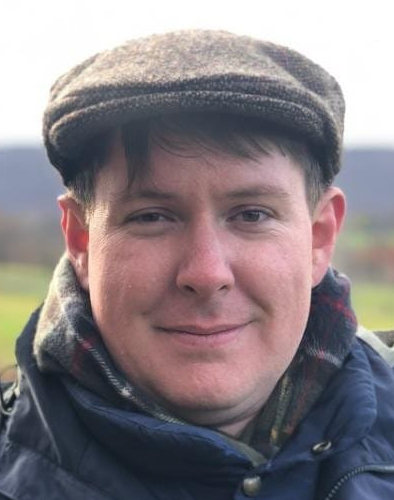
Mark A. Thornton
Mark studies how people organize their knowledge of the social world, and use that knowledge to make accurate social prediction. To this end he uses a combination of fMRI, text analysis, computational modeling, and behavioral methods. He received his A.B. in Psychology from Princeton University in 2011, and his Ph.D. in Psychology from Harvard University in 2017, before returning to Princeton University for postdoctoral training. He is an Assistant Professor in the Department of Psychological and Brain Sciences at Dartmouth College.
POST DOCS

Sareena Chadha
Sareena is a postdoctoral fellow in the Neukom Institute for Computational Science, where she is conducting interdisciplinary research on conversation and social networks. She completed her Ph.D. at the University of Virginia in 2026. Across projects, she has asked questions like: do we see ourselves the same way others do? Does that gap in perception matter for connection to a social network? What behaviors reliably happen in a conversation between friends, and how do those patterns differ for strangers? How people see themselves, how they interact in conversation, and how they connect to their wider communities are interdependent processes. Sareena’s current research is unpacking this interdependence, using a combination of naturalistic paradigms, intensive longitudinal methods, and network analysis. When she isn’t thinking about friendship, she’s probably spending time with friends, meticulously making a new playlist, or reading food journalism.

Tyanna Slobe
Ty is a linguistic anthropologist. Her research focuses on multimodal communicative practices, asking how people draw on talk, prosody, gesture, touch, gaze, posture, and context to co-construct meaning in situated interaction. She is especially interested in the relationship between mundane interactions and broader sociopolitical formations—which has anchored her extensive ethnographic research on youth language and political participation in Santiago, Chile. She has a PhD in Anthropology from UCLA, an MA in Linguistics from the University of Colorado, and a BA in English and Spanish from Colorado State.
GRADUATE STUDENTS

Landry Bulls
Landry completed his B.S. in Psychology at UT Austin before spending two years as a lab manager in the SCRAP Lab, where he developed methods for extracting social signals from audiovisual recordings of naturalistic social interactions. As a PhD student, his research focuses on how humans parse continuous social interactions into meaningful units—a process known as social event segmentation. This involves investigating the perceptual and cognitive mechanisms that allow individuals to identify boundaries between social events, often guided by attentional focus on cues like eye gaze and facial expressions. By integrating techniques from deep learning, social signal processing, and fMRI, Landry aims to uncover the neural and psychological underpinnings of this segmentation process, shedding light on how we navigate complex social environments. Outside of the lab, he enjoys being outdoors, running, people watching, and experimenting with visual effects and audio synthesis.
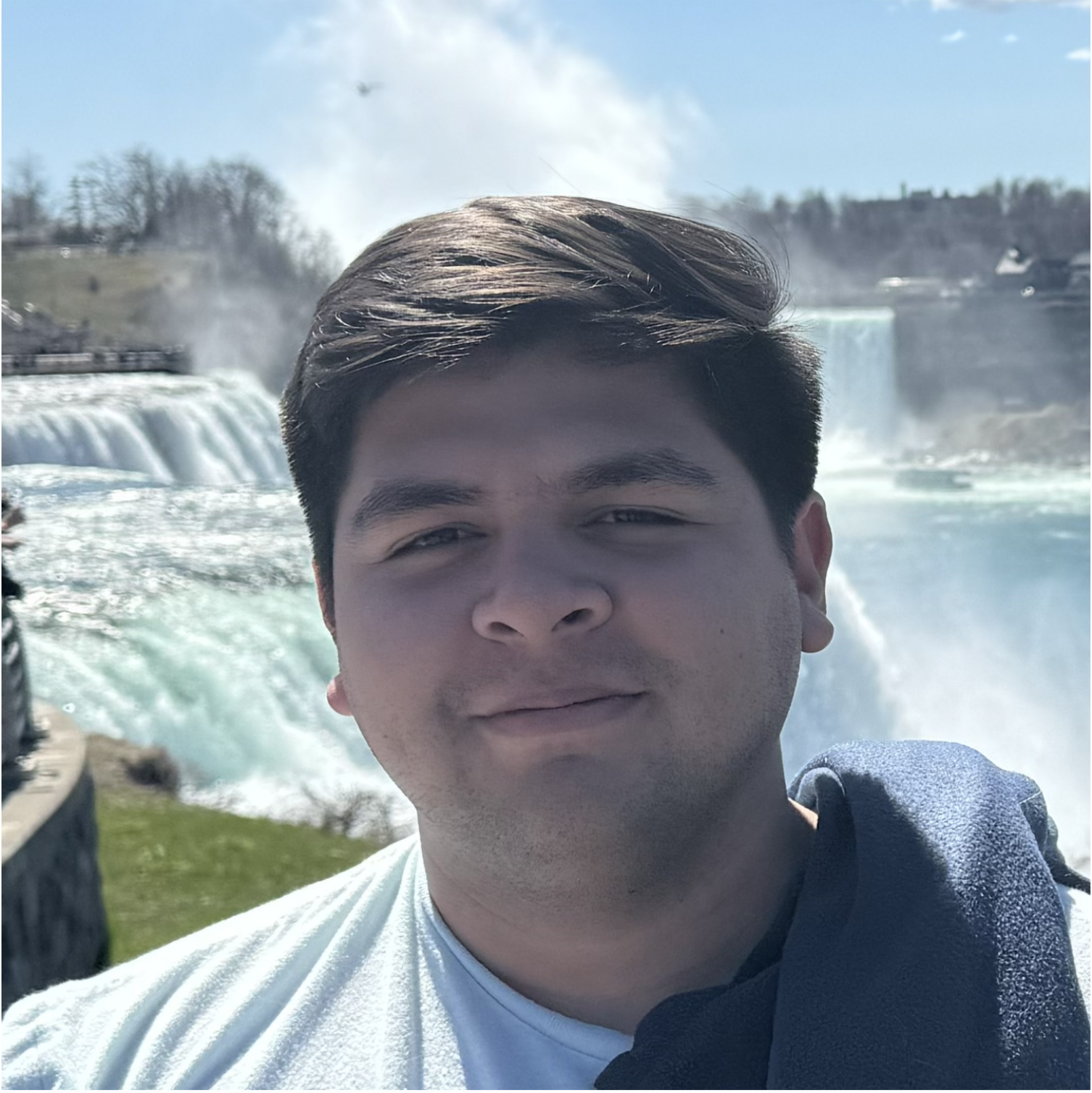
Gabriel Fajardo
Gabriel earned his B.S. in Neuroscience from Boston College, where he worked with Dr. Stefano Anzellotti, utilizing multivariate statistical dependence analyses based on neural networks (MVPN) to study audio-visual integration in the brain. He then spent two years as a lab manager in Dr. Jon Freeman’s lab at Columbia, investigating facial stereotyping, the neural basis of social categorization, and high-dimensional social cognition. As a PhD student, he uses deep learning to model the social brain’s computational mechanisms, investigates the dynamics of impression formation, and explores how we acquire social knowledge. When not in the lab, Gabriel can be found on the soccer field, exploring new cuisines, or at the local cinema.

UNDERGRADUATE RESEARCHERS

Zaneta Pivočová
Coming soon.
Lucas Manso
Coming soon.
LAB ALUMNI

Lindsey Tepfer
Lindsey completed her B.S. in Neuroscience & Biological Anthropology at Temple University. After a few years in industry, she returned to Temple to receive her M.S. in Neuroscience. Broadly, she's interested in theory of mind and person perception across different contexts. Outside of research, she enjoys watercolor painting, muay thai, weightlifting, and 90's anime movies. She completed her PhD at Dartmouth in 2026. She is now a user researcher at The Philadelphia Inquirer.

Amisha Vyas
Amisha received her B.A. in Psychology from New York University. Her previous research with Drs. Jon Freeman and Molly Crockett has broadly explored trait inferences from faces, impression formation, and moral cognition. At SCRAP Lab, she is excited to study how people leverage rich, multi-modal information from social targets and the environment to navigate their social world. Outside of the lab, she enjoys going for long walks, trying new recipes, and exploring history through art, literature, and films. Amisha is currently at PhD Student at Columbia University.
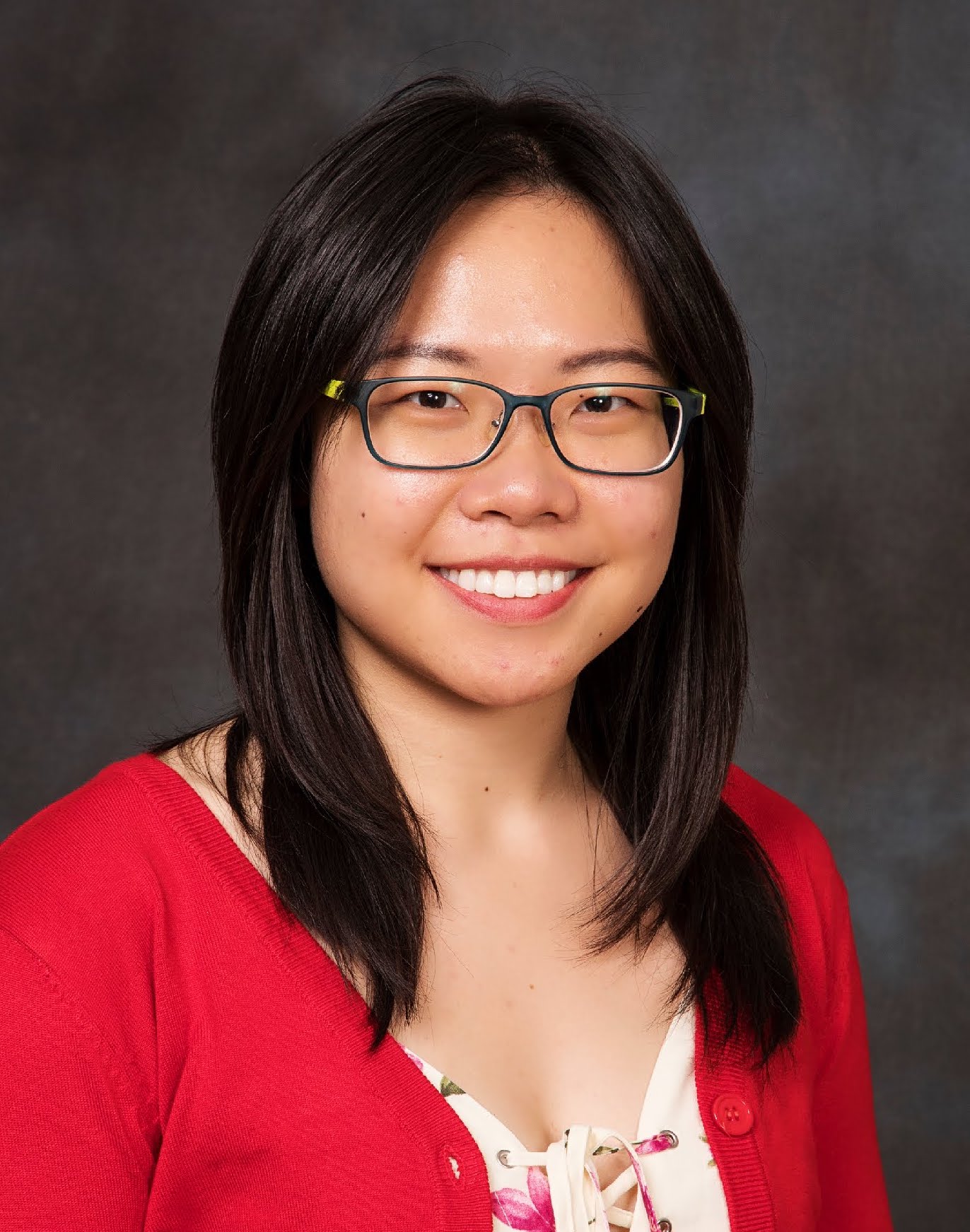
Chujun Lin
Chujun is an Assistant Professor in the Department of Psychology at Columbia University. She completed her Ph.D. in Social Science at the California Institute of Technology in 2019, and her postdoctoral training in Social Psychology at Dartmouth College in 2023. Chujun's work focuses on how people infer others' enduring traits via both dubious shortcuts (e.g. faces) and meaningful signals (e.g., emotions), and how biases in these trait inferences impact consequential real-world decisions (e.g., in politics, media, and science).
Marissa Benz - Research Assistant
Everett Tai - Research Assistant
Gene Park - Research Assistant
Daniel Hong - Research Assistant
Noemi Rivera - Research Assistant
Luke Morrow - Research Assistant
Katherine Jia - Research Assistant
Tiana Duong - Research Assistant
Caroline Conway - Research Assistant
Elizabeth Li - Research Assistant
Jason Davis - Research Assistant
Brandon Dormes - Research Assistant
Bupe Mwalongo - Research Assistant
Eleanor Amer - Research Assistant
Julia Martin - Research Assistant
JOIN US!

Become part of SCRAP Lab!
Want to know more about what it's like to be part of SCRAP Lab? Check out our lab's policy document.
Prospective graduate students: the lab will not be considering graduate applicants during the 2026-2027 admission cycle. See the PBS graduate admissions page for detail about how to apply. Please note that Prof. Thornton does not meet with propsective students prior to department's graduate admissions deadline.
Potential postdocs: researchers interested in joining SCRAP Lab as a postdoc should contact Mark directly to discuss potential projects and funding options. Include your CV and a cover letter describing your interest in the lab.
Lab managers: the lab is not currently seeking any lab managers or research technicians.
Undergraduates: if you are interested in working with us as a research assistant, please contact the post doc(s) or graduate student(s) you would like to work with directly. Include your CV and a brief description of your research interests.